Electric Kayak Motors Explained: Why More Anglers are Choosing Electric Propulsion
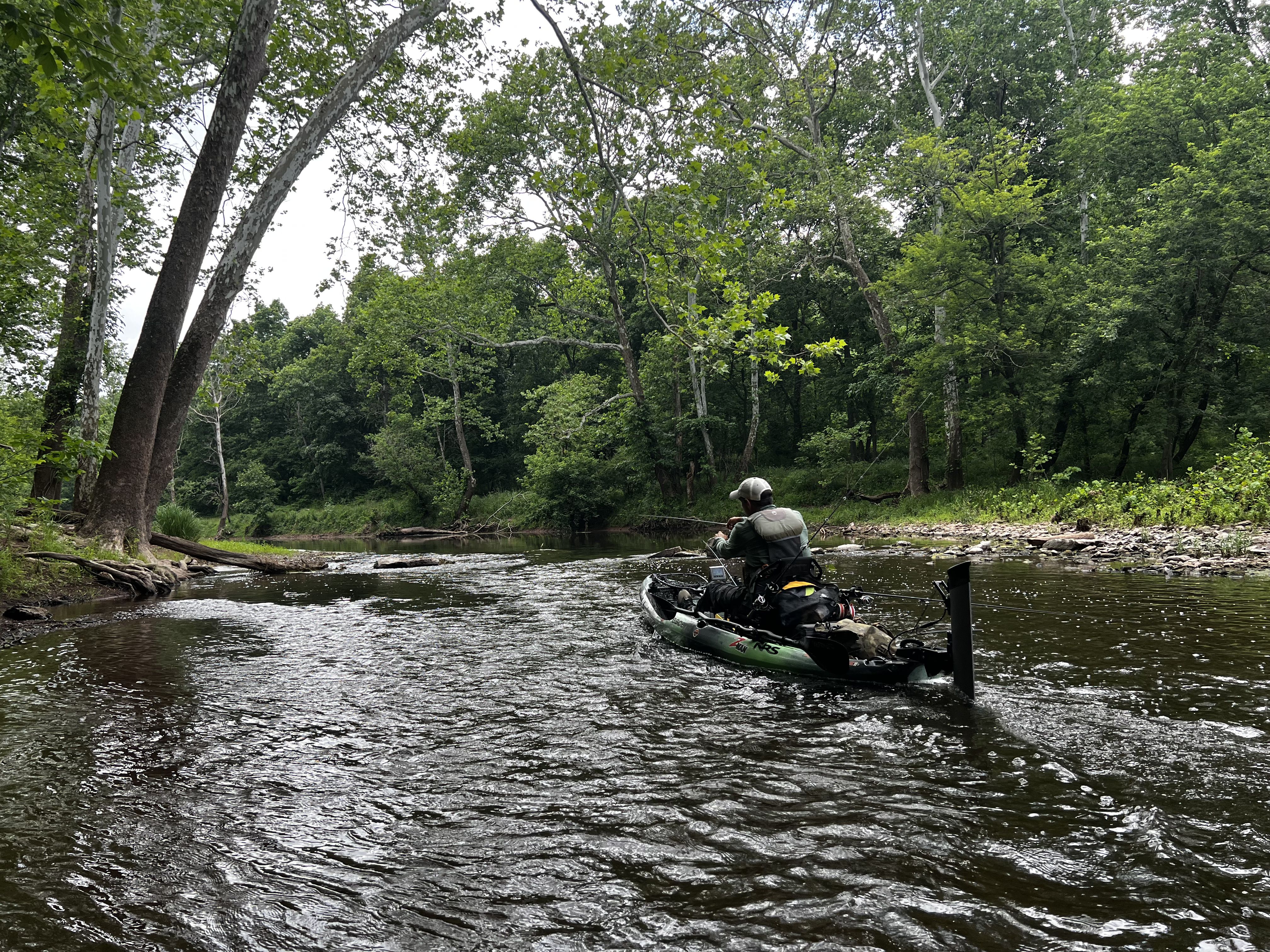
More freedom. More exploration. More time doing what you love.
The first cast of the day always feels full of possibility.
The water is calm, the air is cool and the only sounds are birdsong, the gentle ripple of water against the hull and the occasional splash of fish breaking the surface. As you glide quietly along the shoreline, every overhanging tree, submerged log and patch of weed holds the promise of your next catch.
This is what makes kayak fishing so entertaining.
It's not just about catching fish. It's about slowing down, escaping the crowds and experiencing the water in a way that's simply not possible from the bank or a larger boat. Whether you're casting for bass along a rocky coastline, working a quiet freshwater lake at sunrise or exploring winding rivers that few other anglers can reach, fishing from a kayak puts you at the heart of the environment.
For many anglers, that feeling of independence is what keeps them coming back.
Over the past decade, kayak fishing has become one of the fastest-growing sectors of recreational angling. Modern fishing kayaks have opened up opportunities that simply didn't exist a generation ago. They can be launched from beaches, slipways and riverbanks, transported on a roof rack without the need for a trailer and stored without the expense of marina fees or dedicated boat storage.
In short, they make adventure more accessible.
Today's kayaks have evolved far beyond simple paddle craft. Purpose-built fishing models now feature stable hull designs, integrated gear tracks, rod holders, livewell options and comfortable seating designed for long days on the water. What was once considered a niche pastime has become a serious platform for anglers who want to explore further, fish more effectively and enjoy a closer connection with nature.
At the same time, the technology surrounding kayak fishing has evolved just as quickly.
A New Generation of Kayak Anglers
Walk around almost any kayak fishing event today and you'll see equipment that would have seemed extraordinary just a few years ago.
Compact fish finders reveal underwater structure with remarkable clarity. GPS systems help anglers navigate unfamiliar waters and mark productive fishing spots. Lithium batteries have made onboard power lighter, more efficient and easier to manage than ever before.
None of these innovations have changed the appeal of kayak fishing.
They've simply removed some of the obstacles that once limited what was possible.
Electric propulsion is part of that same evolution.
For some anglers, an electric kayak motor means reaching a distant reef without arriving tired before the first cast. For others, it means confidently crossing a large reservoir, navigating a tidal estuary or returning comfortably when the wind picks up later in the day.
The common misconception is that electric propulsion replaces paddling.
In reality, it enhances the experience.
Most kayak anglers still paddle. They drift quietly along productive shorelines, position themselves around structure and enjoy the physical connection that has always been part of the sport. An electric kayak motor simply becomes another tool, ready when it's needed to cover longer distances, tackle changing conditions or conserve energy for what matters most.
Fishing.
Why More Anglers Are Choosing Electric Propulsion
Ask ten experienced kayak anglers why they fitted an electric motor and you'll probably receive ten slightly different answers.
Some want to cover more water during a single session.
Some fish large lakes or reservoirs where productive areas may be several kilometres apart.
Others regularly face strong tides or headwinds that can turn the journey back to the launch point into the hardest part of the day.
Many simply want to spend less energy travelling and more energy casting.
What connects all of those reasons is choice.
An electric kayak motor doesn't tell you where to fish.
It gives you the confidence to change your plan.
Imagine you've spent an hour working a rocky shoreline without a bite. In the distance, you notice birds diving over baitfish or see activity on your fish finder that suggests another area could be more productive.
Without electric propulsion, you might hesitate.
Is it worth the paddle?
Will the fish still be there by the time you arrive?
With an electric kayak motor, moving becomes an easy decision rather than an exhausting one.
That flexibility allows anglers to respond to changing conditions throughout the day instead of feeling committed to a single location.
Angler Insight
Fish rarely stay in one place all day. Light levels, water temperature, bait movement and weather conditions all influence where they'll feed. One of the greatest advantages of electric propulsion isn't speed. It's giving you the ability to adapt when conditions change.
More Time Fishing, Less Time Travelling
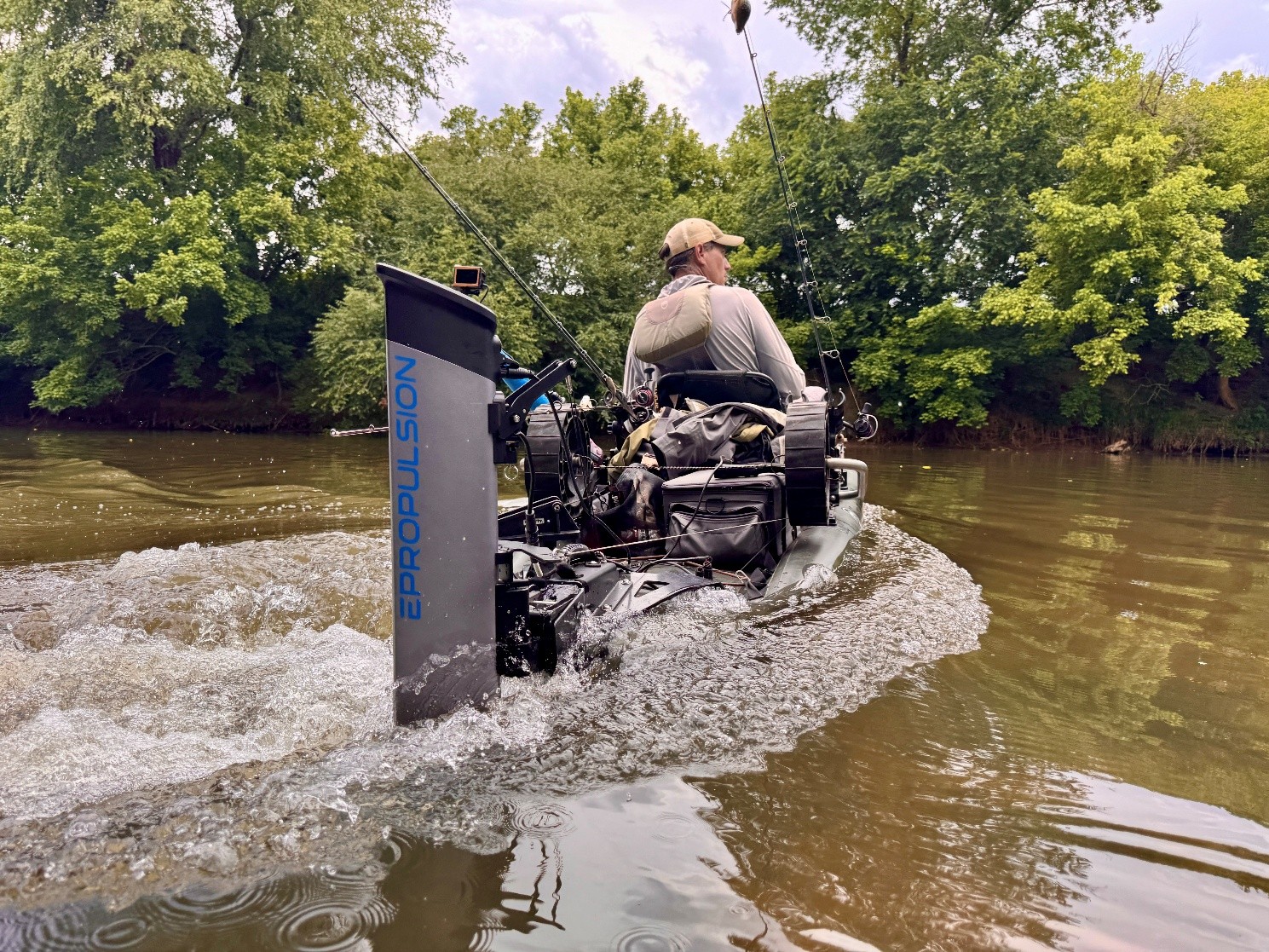
Every angler has experienced it.
You've launched before sunrise, reached your first fishing spot and enjoyed a productive morning. As the sun climbs higher, the bite slows. You know the fish are likely to have moved, but reaching the next promising area means another long paddle.
Sometimes that effort is worthwhile.
Sometimes it isn't.
The uncertainty often means anglers stay exactly where they are, hoping the fishing will improve rather than exploring new water.
Experienced anglers understand that mobility is often one of the biggest advantages they have. Fish move. Conditions change. Wind shifts. Baitfish relocate. Being able to respond quickly increases your chances of finding active fish throughout the day.
Electric propulsion encourages that mindset.
Instead of asking, "Can I make it there?" you begin asking, "Is that where the fish are likely to be?"
That's a subtle difference, but one that can completely change the way you approach a day's fishing.
Preserving What Makes Kayak Fishing Special
One concern sometimes raised by anglers considering an electric kayak motor is whether it changes the character of kayak fishing.
It's a fair question.
After all, much of the appeal comes from the simplicity of paddling quietly across the water, disconnected from the noise and pace of everyday life.
The reality is that electric propulsion complements that experience rather than replacing it.
Modern electric kayak motors are designed to operate quietly and efficiently, allowing anglers to move between fishing locations without the noise, vibration and emissions associated with traditional petrol engines. When you reach your destination, you can simply switch off the motor, pick up your paddle or fishing rod and enjoy the same peaceful experience that drew you to kayak fishing in the first place.
The adventure remains exactly the same.
You simply arrive with more energy to enjoy it.
Technology Should Support the Adventure
One of the reasons modern kayak fishing has grown so rapidly is because technology has become more accessible.
Fish finders help identify underwater structure.
GPS allows anglers to mark productive locations and navigate unfamiliar waters.
Lithium battery technology has made onboard power lighter, more efficient and easier to manage than ever before.
Electric propulsion is simply another part of that evolution.
Like every other piece of equipment on your kayak, it should support your fishing, not distract from it.
The best technology doesn't distract from the experience. It fades into the background, quietly helping you travel further, fish longer and spend more time enjoying the water. That's exactly what modern electric propulsion is designed to do.
The Next Chapter in Electric Kayak Fishing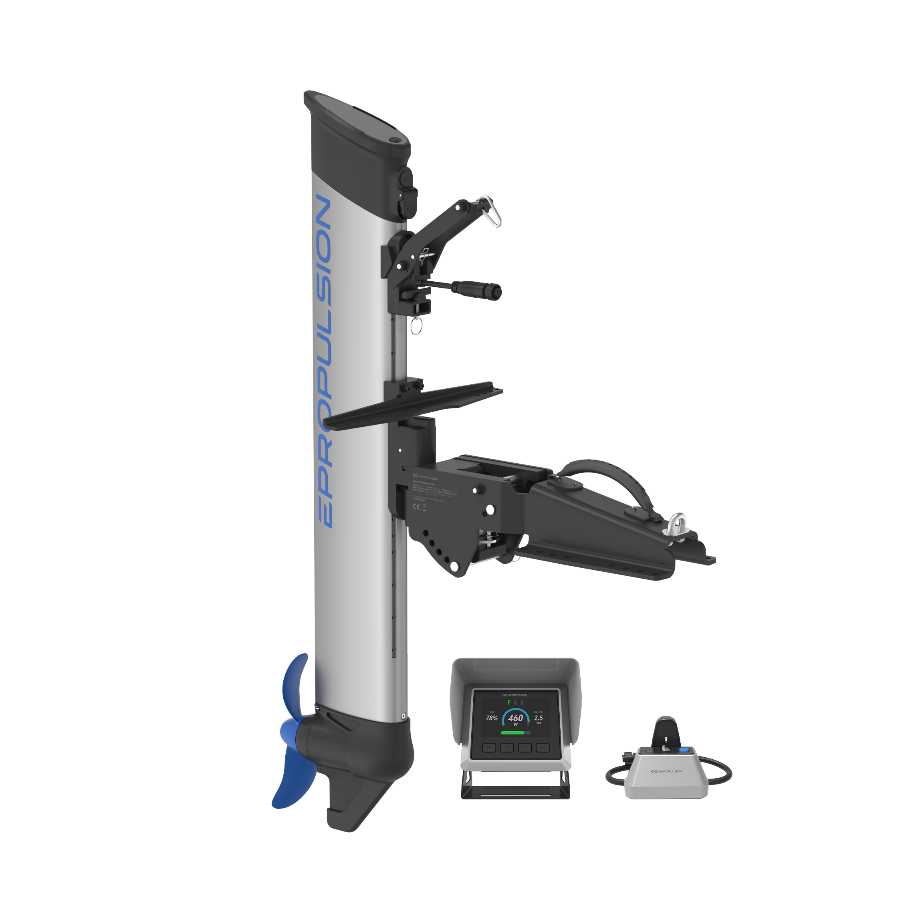
With technology becoming an increasingly natural part of the kayak fishing experience, manufacturers are beginning to look beyond adapting existing outboards and instead develop solutions designed specifically for kayak anglers.
Recognising this shift, ePropulsion has introduced the kLite 750, the first product in its dedicated kayak range.
Rather than simply making a smaller version of an existing motor, ePropulsion has drawn on more than a decade of experience developing electric propulsion systems for recreational and commercial boats to create a solution designed around the realities of modern kayak fishing.
But what actually makes a great electric kayak motor?
Is it power?
Battery life?
Weight?
Ease of use?
Or is it something else entirely?
The truth is, no single specification tells the whole story. The best motor is the one that complements the way you fish, fits your kayak and gives you the confidence to spend longer on the water. Here's what really matters when making your choice.
What Makes a Great Electric Kayak Motor?
Choosing an electric kayak motor isn't simply about finding the biggest battery or the highest top speed.
In fact, those are often the least important considerations.
Unlike larger boats, every piece of equipment on a fishing kayak has to justify its place. Space is limited. Weight matters. Every additional item affects how your kayak performs, how easy it is to transport and, ultimately, how enjoyable your day on the water will be.
The best electric kayak motor isn't necessarily the most powerful.
It's the one that fits the way you fish.
Whether you're heading out for an hour after work or planning a full day's adventure on a large reservoir or sheltered coastline, there are a handful of factors that deserve far more attention than headline specifications.
Weight Is More Important Than Power
Ask any experienced kayak angler what they value most and "lightweight" is almost guaranteed to feature near the top of the list.
That's because the fishing trip begins long before your kayak reaches the water.
You still need to lift it onto your vehicle, transport it to your launch point, unload your equipment and carry everything to the shoreline.
Every kilogram makes a difference.
A heavy propulsion system can quickly turn one of kayak fishing's greatest strengths, its simplicity, into unnecessary hard work.
A lightweight electric kayak motor helps preserve everything that makes kayak fishing so accessible. It's easier to transport, quicker to install and less demanding to remove at the end of a long day.
The easier your equipment is to use, the more likely you are to use it.
Pro Tip
Think beyond the weight of the motor itself. Consider the total system you'll carry to the water, including the battery, mounting hardware and any additional equipment.
Quiet Propulsion Lets Nature Take Centre Stage
One of the biggest reasons anglers choose kayak fishing is because it offers a different pace.
You're closer to the water.
Closer to wildlife.
Closer to the fish.
The gentle sound of water against the hull, birds feeding overhead and fish moving beneath the surface are all part of the experience.
Your propulsion system should complement that environment, not dominate it.
Modern electric kayak motors operate quietly, allowing anglers to move between fishing locations without the noise and vibration associated with traditional petrol engines.
The benefit isn't simply about reducing disturbance.
It's about preserving the experience that makes kayak fishing unique.
Efficiency Beats Outright Speed
It's easy to compare motors by looking at maximum speed.
But ask yourself a simple question.
How often do you really want to travel as fast as possible in a fishing kayak?
For most anglers, the answer is "rarely."
The goal isn't to race across the water.
It's to travel comfortably, efficiently and with complete control.
A good electric kayak motor should help you reach your destination without draining your battery unnecessarily, allowing you to spend longer exploring and less time worrying about how much power you have left.
Smooth, predictable performance also makes manoeuvring around pontoons, weed beds, fallen trees and rocky shorelines far easier than relying on bursts of maximum power.
Efficiency almost always delivers a better fishing experience than outright speed.
Simplicity Makes Every Trip Better
Fishing trips often start early.
Sometimes before sunrise.
The last thing anyone wants is equipment that takes longer to assemble than it does to use.
That's why ease of installation and day-to-day operation are so important.
Simple controls.
Straightforward mounting.
Easy transportation.
These may not be the most exciting features on a specification sheet, but they'll probably have a greater impact on your overall ownership experience than a small increase in top speed or power.
The best equipment becomes almost invisible.
Reliability Builds Confidence
Conditions on the water can change quickly.
A calm morning can become a windy afternoon.
A freshwater lake can give way to a saltwater estuary on your next trip.
Mud, sand, spray and changing weather all place demands on your equipment.
That's why reliability matters.
A dependable electric kayak motor gives you confidence to explore further, knowing it'll perform consistently throughout the day.
Just as importantly, it gives you confidence that you'll get home comfortably if conditions change.
When you're fishing from a kayak, reliability isn't simply convenient.
It's reassuring.
Choosing the Right Motor for the Way You Fish
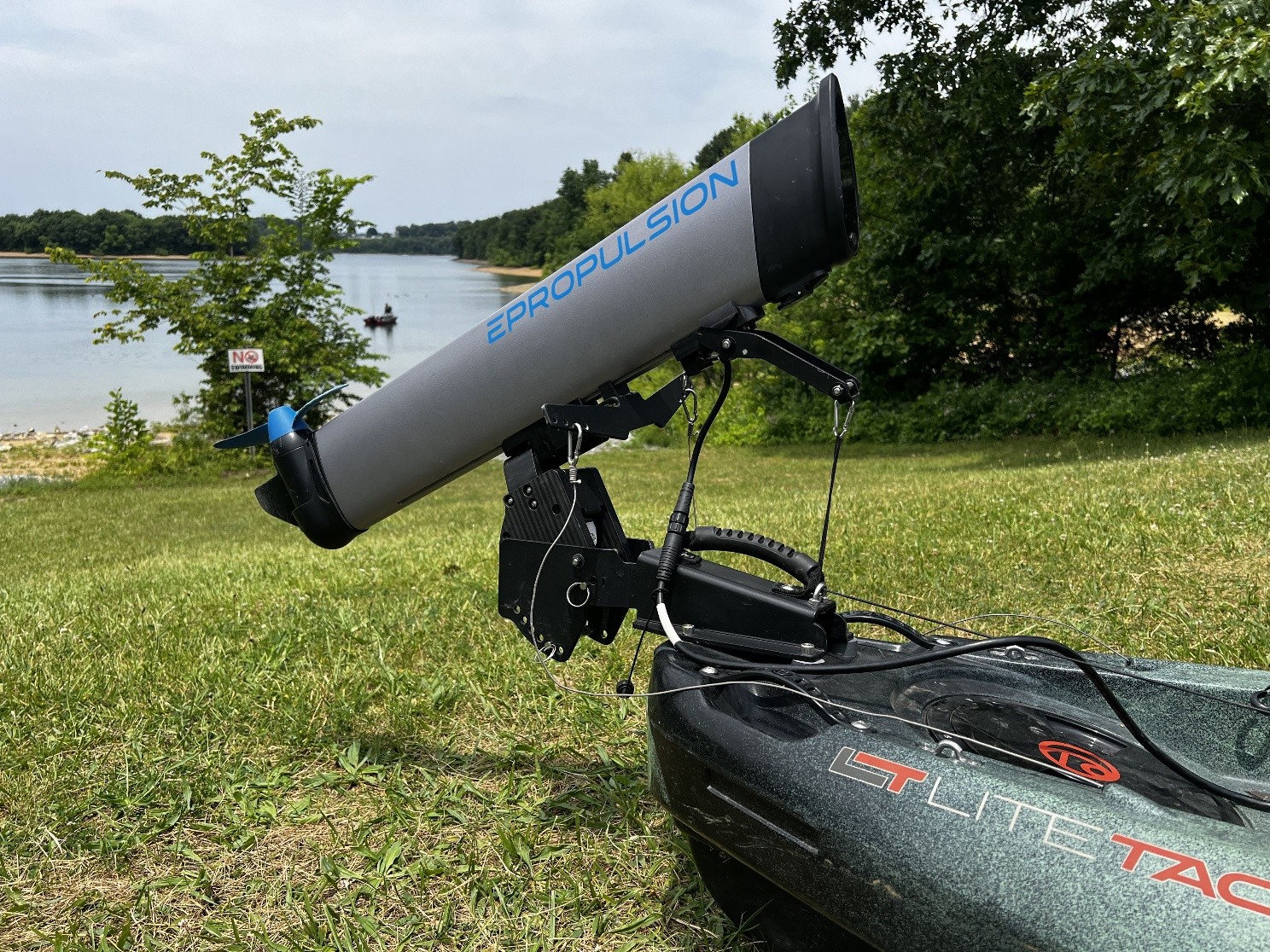 There's no single electric kayak motor that's perfect for everyone.
The right choice depends on how and where you fish.
Before comparing product specifications, ask yourself a few practical questions.
| Ask yourself… | Why it matters |
| Where do I fish most often? | Large lakes, reservoirs and coastal waters often require greater efficiency and longer operating time than smaller inland waters. |
| How do I transport my kayak? | If you're lifting your kayak onto a roof rack on your own, keeping your propulsion system as light as possible, becomes even more important. |
| How long are my typical fishing trips? | Longer adventures place greater emphasis on efficient power management and comfort. |
| Do I regularly fish in wind or current? | A reliable motor can make returning to your launch point safer and less tiring. |
| Will I launch and recover on my own? | Easy installation and portability can make every trip significantly more enjoyable. |
These questions are often far more valuable than comparing technical specifications alone.
Angler Insight
Many experienced kayak anglers don't use electric propulsion for the entire day. They'll paddle quietly while fishing a shoreline or drifting over structure, then use the motor to relocate quickly when conditions change or the fish move. Think of your motor as another tool in your fishing kit, not a replacement for the paddle.
From Experience to Innovation
After more than a decade developing electric propulsion systems for recreational boats, sailing yachts and commercial vessels, ePropulsion approached kayak fishing with a simple question.
What do kayak anglers actually need?
The answer wasn't more speed.
It wasn't bigger motors.
And it certainly wasn't more complexity.
It was a propulsion system that preserves everything anglers already love about kayak fishing while making it easier to explore further, stay out longer and make every trip more enjoyable.
Those principles became the foundation for the ePropulsion kLite 750, the company's first purpose-built electric kayak motor.
Designed Around the Way You Fish
By now, one thing should be clear.
The best electric kayak motor isn't the one with the biggest numbers on a specification sheet.
It's the one that makes your time on the water more enjoyable.
It should be light enough to carry without effort. Quiet enough to preserve the peaceful nature of kayak fishing. Efficient enough to help you explore further and intuitive enough that it quickly becomes part of your routine rather than another piece of equipment to think about.
Those principles sound simple.
Designing a motor around them is another challenge entirely.
Looking at Kayak Fishing Through Fresh Eyes
Unlike a larger boat, a fishing kayak offers very little room for compromise.
Every piece of equipment has to justify its place.
Every decision affects how easy the kayak is to transport, launch and use throughout the day.
Rather than asking how to make an existing outboard smaller, ePropulsion approached the project from a different perspective.
The question wasn't:
"How do we build a kayak motor?"
It was:
"How do we build a better day on the water for kayak anglers?"
That subtle difference shaped every stage of development.
Instead of beginning with performance figures, the focus remained firmly on the people who would use the product.
How do they transport their kayaks?
Where do they fish?
What frustrates them most?
How can electric propulsion enhance the experience without changing what they already love about fishing from a kayak?
Those questions became the foundation for the kLite 750.
Engineering That Starts With the Angler
It's easy to assume product development begins with technical specifications.
In reality, the best products often begin by solving everyday problems.
For kayak anglers, those problems are surprisingly consistent.
Carrying heavy equipment from the car to the water.
Covering long distances before the first cast.
Battling a headwind on the journey home.
Trying to decide whether the next promising fishing spot is worth the effort of paddling to.
The kLite 750 was designed to remove those barriers, allowing anglers to spend less time thinking about logistics and more time enjoying the water.
That's why the focus wasn't on building the most powerful motor in the category.
It was on creating one that feels like a natural extension of the kayak itself.
Built for Easy Transport
One of the biggest priorities during development was portability.
Fishing kayaks are chosen because they're simple.
You don't need a trailer.
You don't need a marina berth.
You don't need specialist launching equipment.
The propulsion system shouldn't take those advantages away.
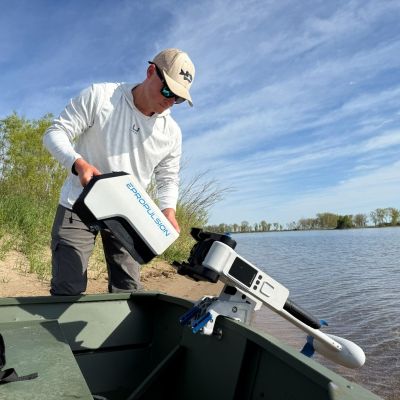
That's why the ePropulsion kLite 750 motor weighs just 14.3 lb (6.5 kg), with the motor mount adding a further 5.1 lb (2.3 kg). The design makes it easy to transport, install and remove, helping preserve the simplicity that makes kayak fishing so enjoyable.
For anglers who fish alone, that difference becomes even more noticeable.
Quiet by Nature
Kayak fishing has never been about making the biggest wake or travelling at the highest speed.
It's about moving through the environment with as little disturbance as possible.
That's one of the reasons electric propulsion has become so popular.
The kLite 750 delivers smooth, quiet propulsion that complements the natural rhythm of kayak fishing, allowing anglers to move efficiently between locations while preserving the peaceful atmosphere that makes every trip memorable.
When you arrive at your next fishing spot, the focus returns exactly where it belongs.
Reading the water.
Watching for signs of fish.
Planning the next cast.
Not listening to an engine.
Built for the Real World
No two fishing trips are ever the same.
Some begin before sunrise on calm lakes.
Others finish battling an afternoon breeze across open water.
Some involve short evening sessions after work.
Others become full-day adventures exploring unfamiliar coastlines and winding rivers.
That's why the kLite 750 has been designed around versatility rather than a single style of fishing.
Its compact design, intuitive controls and selectable power modes allow anglers to adapt naturally as conditions change throughout the day, while reverse functionality makes manoeuvring around launch sites, pontoons and confined spaces simple and controlled.
Rather than demanding your attention, it quietly supports the way you already fish.
More Than a Product Launch
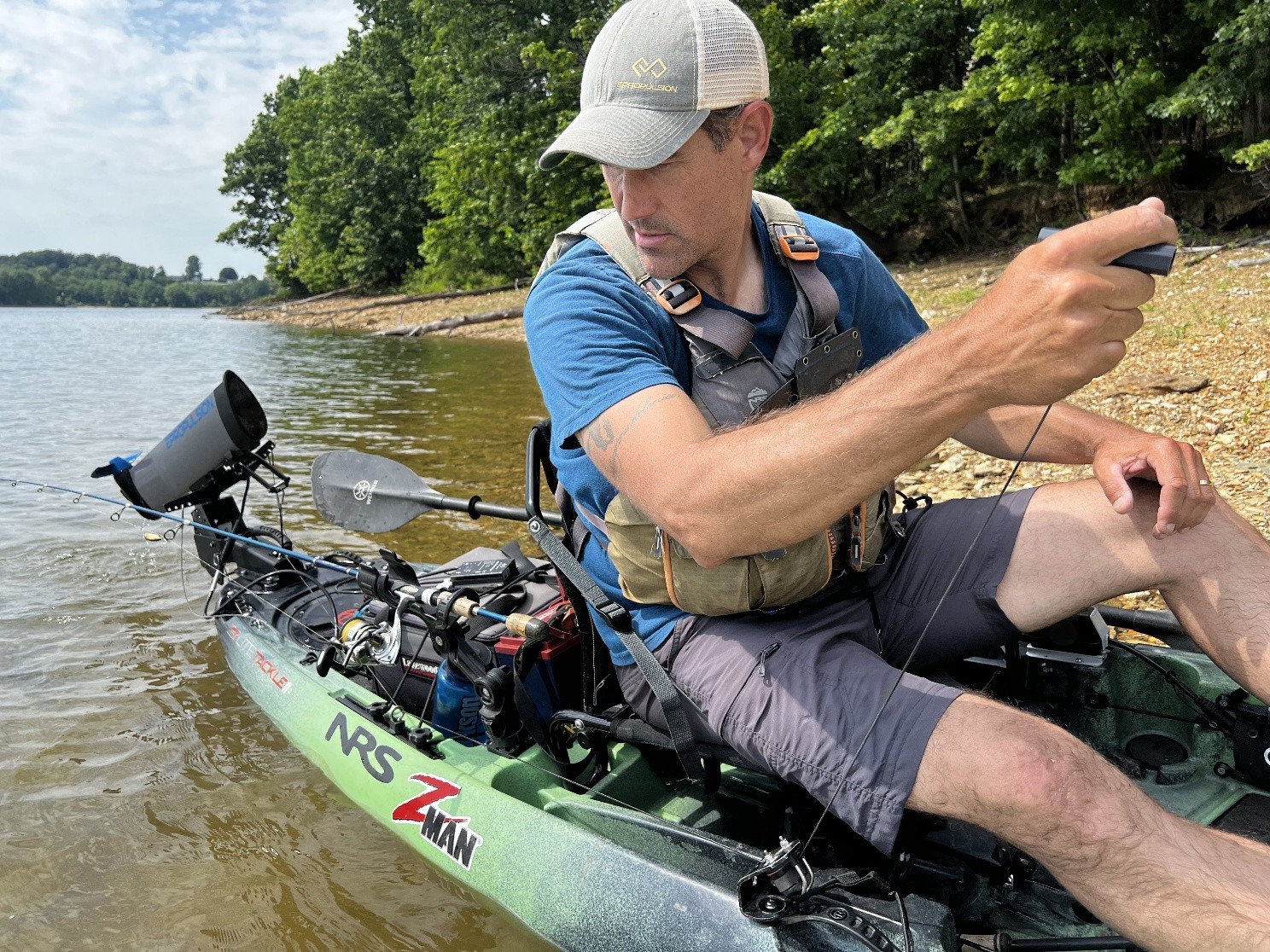
The introduction of the kLite 750 represents something much bigger than the launch of another electric motor.
It marks ePropulsion's commitment to one of the fastest-growing areas of recreational angling.
Around the world, more anglers are discovering the flexibility that kayak fishing offers, and with that growth comes an opportunity to develop propulsion systems designed specifically for their needs rather than adapted from larger boats.
The kLite 750 is the first step in that journey.
It reflects ePropulsion's belief that kayak anglers deserve products engineered around the realities of their sport, not simply scaled-down versions of existing technology.
Looking Ahead
The launch of the kLite 750 is only the beginning.
As ePropulsion continues to invest in innovation across the electric boating industry, its growing kayak range will benefit from the same engineering philosophy that has shaped the company's wider product portfolio.
That commitment can already be seen beyond the kLite 750.
Alongside its new kayak motor, ePropulsion has introduced the kMax Battery, a high-capacity lithium battery developed for compatible ePropulsion propulsion systems. While it serves a different application and is not designed for use with the kLite 750, it reflects the same focus on efficiency, reliability and intelligent energy management that runs throughout the company's product range.
Together, these launches demonstrate a long-term investment in electric boating, with solutions tailored to the needs of different types of boaters rather than a one-size-fits-all approach.
Frequently Asked Questions About Electric Kayak Motors
Are electric kayak motors worth buying?
For many anglers, the answer is yes. An electric kayak motor can help you travel further, conserve energy and adapt more easily to changing conditions on the water. Rather than replacing paddling, it gives you another option when facing long distances, headwinds or the need to relocate quickly between fishing spots.
Do you still paddle with an electric kayak motor?
Absolutely. Most kayak anglers continue to paddle throughout the day, particularly when fishing shorelines, working around structure or making small adjustments to their position. An electric motor complements the experience rather than replacing it, allowing you to choose the best method for the conditions and the type of fishing you're doing.
How far can an electric kayak motor take you?
Range depends on several factors, including the motor, battery capacity, speed, wind, current and the total weight you're carrying. Travelling at lower speeds typically extends operating time, while strong headwinds or tidal conditions can reduce range. Understanding how and where you fish is often more important than simply comparing battery sizes.
Can I use an electric kayak motor in saltwater?
Many modern electric kayak motors are designed for both freshwater and saltwater use, provided they are used and maintained in accordance with the manufacturer's guidance. Rinsing your motor with fresh water after saltwater use and carrying out routine maintenance will help ensure reliable long-term performance.
What should I look for when buying an electric kayak motor?
The best electric kayak motor is one that suits your style of fishing. Consider the total system weight, ease of transport, quiet operation, efficiency, battery performance and how simple the motor is to install and use. Rather than focusing solely on top speed, think about how the motor will improve your overall experience on the water.
Ready to Explore Further?
Whether you're exploring a new coastline, crossing a large reservoir or simply making the most of a few hours on your local water after work, the right electric kayak motor gives you the confidence to travel further, adapt to changing conditions and spend more time doing what matters most.
Fishing.
At ePropulsion, we believe technology should support the adventure, not define it. That's why the kLite 750 has been designed specifically for the needs of modern kayak anglers, combining portability, quiet operation and intuitive performance in a propulsion system that works with the way you fish.
The next memorable fishing trip isn't defined by the number of fish you catch. It's the quiet sunrise, the hidden inlet you discover or the decision to paddle just a little further because you know you can.
If electric propulsion can help create more days like that, then it's worth exploring what the ePropulsion kLite 750 can offer.