Hybrid Propulsion Systems: The Best of Both Worlds?
Electric boating is no longer a glimpse into the future. It's happening now.
Advances in battery technology, charging infrastructure and electric propulsion systems are making it possible for more boat owners than ever to leave fossil fuels behind. From quiet inland waterways to busy marinas and commercial harbours, electric propulsion is changing the way people experience life on the water.
But as capable as modern electric propulsion has become, there are still situations where a fully electric system isn't always the perfect fit.
Commercial operators may need to stay on the water all day without returning to shore. Larger leisure boats often cover greater distances than a day cruiser, while some remote locations simply don't have charging infrastructure readily available.
That's where hybrid propulsion systems come in.
Rather than choosing between diesel or electric, hybrid propulsion combines the strengths of both. It puts electric propulsion at the heart of the vessel while using a generator to recharge the batteries whenever additional energy is needed.
For many boats, it's not about replacing electric power. It's about extending what electric propulsion can do.
As the marine industry continues its journey towards decarbonisation, hybrid technology is becoming an increasingly important part of the conversation. Yet it's also one of the most misunderstood.
So, what exactly is a hybrid propulsion system, and why are more boat builders and owners beginning to embrace it?
What is a hybrid propulsion system?
A hybrid propulsion system combines an electric propulsion system with an onboard power source, allowing a vessel to operate using electricity while maintaining the flexibility to generate additional power when required.
Unlike a conventional diesel-powered boat, where the engine mechanically drives the propeller, a hybrid system uses an electric motor as the primary source of propulsion.
The batteries provide power to the motor, while a generator can recharge those batteries during operation when additional range or longer operating times are required.
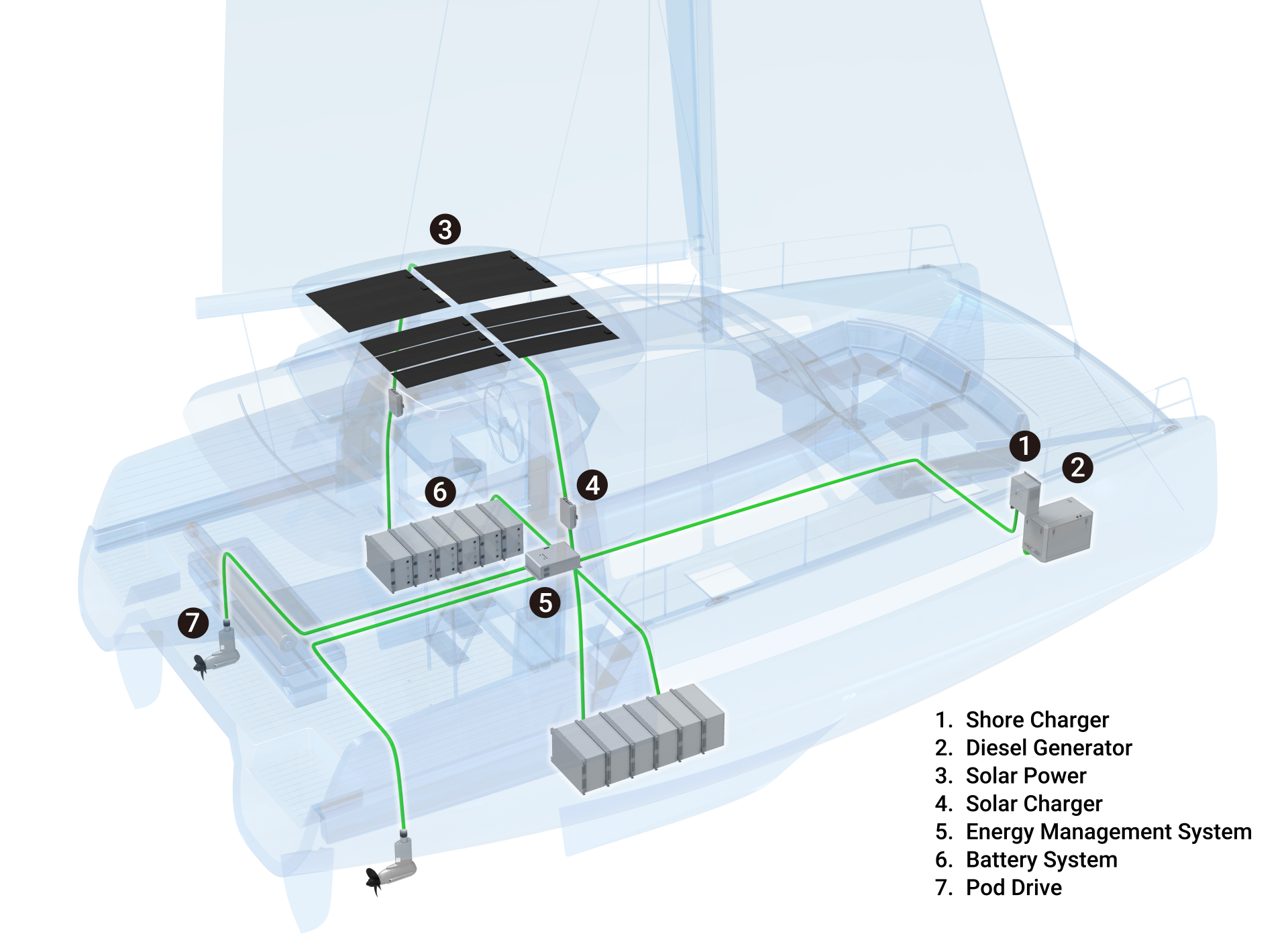
How does a hybrid propulsion system work?
An easier way to understand hybrid propulsion is to think of the generator as an onboard charging station.
Instead of supplying mechanical power directly to the propeller, the generator produces electricity. That electricity is used to recharge the battery bank, which in turn powers the electric motor.
The flow of energy looks like this:
Shore Power / Solar / Generator → Batteries → Electric Motor → Propeller
Because the electric motor is always providing propulsion, the experience at the helm remains consistent regardless of where the electricity originated.
Whether you've charged the batteries overnight in the marina, topped them up using solar panels, or are generating electricity from a generator while underway, the boat still benefits from the instant torque, quiet operation and precise control that electric propulsion is known for.
The four key components of a hybrid propulsion system
Although every installation is different, most marine hybrid propulsion systems are built around four essential components.
Electric motor
The electric motor is the heart of the propulsion system. It converts electrical energy into thrust, delivering instant torque, smooth acceleration and highly responsive throttle control. Because there are fewer moving parts than a conventional combustion engine, electric motors also offer quieter operation and reduced maintenance requirements.
Battery system
The battery bank stores the energy needed to power the electric motor. Modern lithium batteries are far more than simple energy storage devices. Working alongside an advanced Battery Management System (BMS), they continuously monitor voltage, temperature and overall system health to maximise efficiency, safety and battery lifespan.
Generator
Rather than driving the propeller directly, the generator's sole purpose is to produce electricity. When battery levels begin to fall or longer operating times are required, the generator replenishes the battery bank, allowing the electric propulsion system to continue operating.
Intelligent power management
Behind every successful hybrid system is sophisticated energy management software. This acts as the brain of the installation, deciding where electricity should flow at any given moment. It balances charging, propulsion and onboard electrical loads to maximise efficiency while ensuring the boat always has the power it needs.
Why hybrid propulsion isn't simply "diesel with batteries"
It's easy to assume a hybrid boat is simply a conventional diesel boat with a battery pack bolted on.
In reality, the philosophy behind hybrid propulsion is completely different.
A traditional propulsion system is built around the engine.
Everything else exists to support it.
A hybrid propulsion system is built around electricity.
Instead of asking, "How do we transfer power from the engine to the propeller?", hybrid systems ask a different question:
"How do we manage energy as efficiently as possible?"
That shift changes the role of every component onboard.
In a traditional diesel installation:
- The engine drives the propeller.
- Fuel is converted directly into propulsion.
- Mechanical systems transmit power through shafts and gearboxes.
Whereas, in a hybrid propulsion system:
- Batteries become the primary energy store.
- The electric motor always provides propulsion.
- Intelligent software manages the flow of energy.
- A generator supplies additional electricity when required.
It's a fundamentally different approach to marine propulsion that is helping boat builders rethink how vessels are designed for the future.
Why is a Hybrid Propulsion System More Fuel Efficient?
One of the biggest advantages of a hybrid propulsion system isn't simply that it includes a generator. It's how that generator is used.
On a conventional diesel-powered boat, the engine is responsible for everything. It has to respond instantly to every movement of the throttle, every change in sea conditions and every increase or decrease in speed. As a result, the engine is constantly speeding up and slowing down, often operating outside its most efficient range.
A hybrid propulsion system works very differently.
Because the electric motor provides propulsion, the generator no longer has to react to changing power demands. Instead, it can operate at a constant, efficient output, producing electricity when it's needed and allowing the intelligent energy management system to decide exactly where that power should go.
Rather than simply charging the batteries, the system continuously balances energy between the propulsion motor and the battery bank.
For example:
- If the generator is producing more power than the motor currently requires, the surplus electricity is used to recharge the batteries.
- If the motor suddenly demands more power than the generator is producing, the batteries instantly provide the additional energy.
- Once power demand falls again, the generator returns to replenishing the battery bank while continuing to operate at its optimum efficiency.
This intelligent balancing of energy is a defining feature of the hybrid propulsion system.
Instead of constantly increasing and decreasing engine speed to match every movement of the throttle, the generator focuses on one job: generating electricity as efficiently as possible. The electric propulsion system and battery bank then work together to deliver exactly the right amount of power to the motor, exactly when it's needed.
The benefits of intelligent energy management
By allowing the generator to operate in its most efficient operating range, a hybrid propulsion system can deliver several important advantages:
- Improved fuel efficiency compared with conventional propulsion systems, depending on the vessel and operating profile.
- Reduced generator running time, helping lower fuel consumption and emissions.
- Instant power delivery from the batteries whenever additional performance is required.
- Quieter operation, as the generator only runs when additional energy is needed.
- Smoother, more consistent performance because the electric motor, rather than the generator, is responsible for propulsion.
Rather than burning fuel to drive the propeller directly, fuel is being used to generate electricity as efficiently as possible. Every unit of energy is then managed intelligently, ensuring as little as possible is wasted.
For boat owners, this means lower running costs, greater flexibility and the confidence that the propulsion system is always making the most efficient use of the energy available.
The result is a propulsion system that is both responsive and highly efficient.
Why are Hybrid Propulsion Systems Becoming More Popular?
Hybrid propulsion isn't becoming more popular simply because it's new.
It's becoming more popular because boat owners are asking more from their propulsion systems than ever before.
- They want quieter cruising.
- They want lower running costs.
- They want reduced emissions.
- They want the confidence to travel further without sacrificing comfort or performance.
Hybrid propulsion answers many of those challenges by combining the best characteristics of electric propulsion with the flexibility of onboard power generation.
Quiet, comfortable boating
One of the first things people notice when they experience electric propulsion is what they don't hear.
Without the constant vibration and engine noise associated with conventional propulsion, time on the water becomes noticeably more relaxing. Conversations are easier, wildlife is less disturbed and manoeuvring around marinas becomes a calmer experience.
Even when a generator is operating, the propulsion itself remains smooth and electric.
Greater flexibility
Not every journey is the same.
Some days you may only spend a few hours on the water before returning to shore. Other days might involve much longer passages or commercial operations where downtime simply isn't an option.
Hybrid propulsion provides greater flexibility by allowing the electric propulsion system to continue operating while the batteries are replenished by a generator when required.
Reducing range anxiety
For many boat owners considering electric propulsion, this concern tends to come up more than any other:
"What happens if I run out of battery?"
As battery technology continues to improve, this question is becoming less common. However, hybrid propulsion offers an additional layer of reassurance for operators who regularly undertake longer journeys or work in remote locations.
If battery levels begin to fall, the generator can be started to recharge the battery bank, extending the operating time of the electric propulsion system.
For commercial operators, this provides valuable operational flexibility. For recreational boaters, it delivers greater peace of mind, knowing a dependable backup energy source is available should the batteries require recharging.
For many owners, that additional reassurance makes the transition to electric propulsion feel far more achievable.
You're in control
Another advantage of hybrid propulsion is flexibility.
Unlike a conventional diesel engine that must run whenever propulsion is required, a hybrid system gives you greater control over when the generator operates.
For example, you may choose to:
- Cruise silently on battery power while leaving or entering a marina.
- Spend the evening and overnight at anchor using battery power alone.
- Run the generator during the day, when noise is less of a concern, to recharge the batteries.
- Power both propulsion and onboard hotel loads from the battery bank overnight after charging during the day.
This allows owners to enjoy quiet evenings on the water without needing to run the generator. The same intelligent energy system can power propulsion, domestic appliances, lighting, refrigeration and navigation equipment, while providing the confidence that additional onboard power is available whenever it's needed.
Why Batteries Are the Heart of a Hybrid Propulsion System
If the electric motor is the heart of a hybrid propulsion system, then the batteries are its lifeblood.
Without them, there would be no energy to deliver the instant torque, quiet operation and smooth acceleration that make electric propulsion such a different experience from conventional diesel boating.
It's easy to think of batteries as simply storing electricity, but modern lithium battery systems do far more than that. They continuously manage, distribute and protect energy, ensuring power is available exactly when and where it's needed.
In a hybrid propulsion system, that role becomes even more important.
More than energy storage
Unlike a conventional diesel engine, where fuel is continuously converted into power, hybrid systems must intelligently manage the flow of electricity between multiple components.
That means the battery system is constantly balancing energy from different sources while supplying power to the electric motor and onboard equipment.
Depending on the vessel, batteries may receive energy from:
- Shore power charging.
- Solar panels.
- Regenerative charging, where applicable.
- A generator.
As the system operates, they're supplying electricity to:
- The electric propulsion system.
- Navigation equipment.
- Lighting.
- Domestic appliances.
- Other onboard electrical systems.
This continuous movement of energy means the battery system is doing far more than storing electricity. It's acting as the central energy hub for the entire vessel.
Why lithium batteries make all the difference
Marine batteries have evolved dramatically over the past decade.
Older lead-acid batteries were heavy, slow to recharge and could only use a relatively small proportion of their total capacity before performance suffered.
Modern lithium battery technology has transformed what's possible, offering significant advantages over traditional battery technologies, including:
- Higher energy density.
- Faster charging.
- Longer service life.
- Reduced weight.
- Greater efficiency.
- Consistent performance throughout the discharge cycle.
For boat owners, that translates into more usable energy, improved performance and greater confidence every time they head out on the water.
Intelligent battery management matters just as much
Not all battery systems are created equal.
In fact, one of the biggest differences between a good hybrid propulsion system and a great one often lies not in the batteries themselves, but in how intelligently they're managed.
Every modern lithium battery should include a sophisticated Battery Management System (BMS) that continuously monitors the health of the battery pack.
This includes factors such as:
- Voltage.
- Temperature.
- Charge and discharge rates.
- Cell balancing.
- Overall battery health.
By constantly analysing this information, the BMS helps maximise efficiency, protect the batteries from damage and extend their operational lifespan.
For hybrid propulsion systems, where batteries may be charging and discharging simultaneously, intelligent battery management becomes even more critical.
It's the technology working quietly in the background that allows the entire system to operate safely and efficiently.
Why an Integrated Electric Propulsion Ecosystem Matters
As hybrid propulsion becomes more common, another trend is emerging across the marine industry.
Manufacturers are moving away from treating motors, batteries and controls as separate components.
Instead, they're designing complete propulsion ecosystems where every part has been engineered to work together.
That integration has significant advantages.
Rather than asking installers to combine products from multiple suppliers, an integrated system allows the motor, batteries, displays and control systems to communicate seamlessly.
The result is:
- Simpler installation.
- More efficient energy management.
- Improved reliability.
- Easier diagnostics.
- A better overall user experience.
For both boat builders and owners, that's becoming increasingly important as propulsion systems grow more sophisticated.
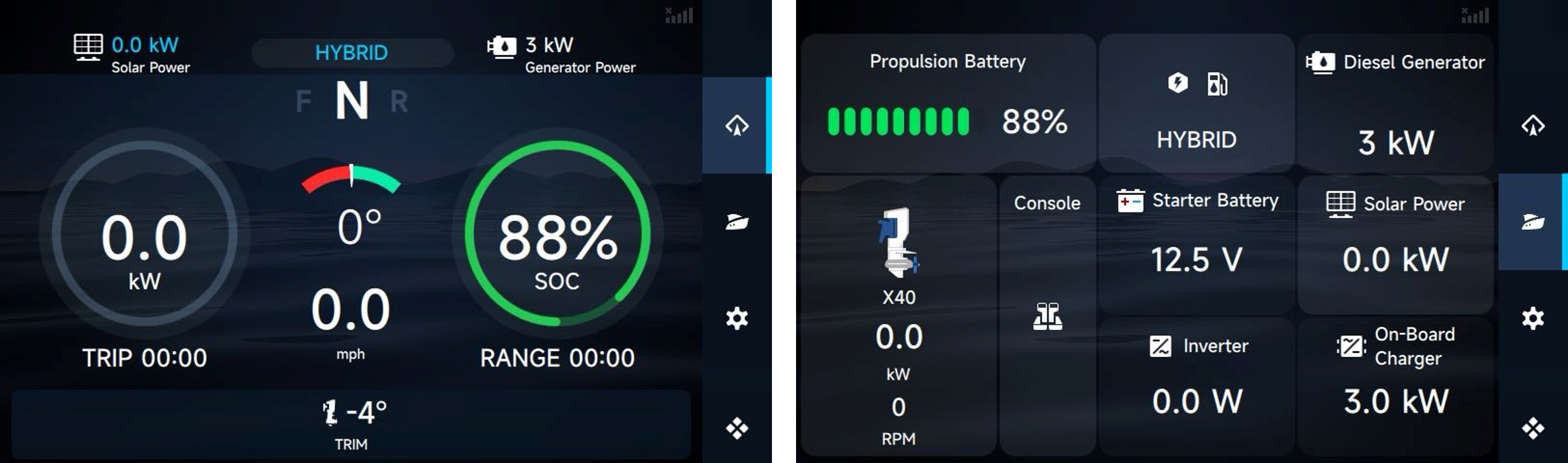
Building the electric foundation
Because the electric propulsion system remains responsible for moving the boat, it makes sense to start with the electric platform first.
The generator is there to support the system.
The electric ecosystem is what defines how the boat performs.
This is the philosophy behind ePropulsion's 96V electric propulsion ecosystem.
Rather than developing individual products in isolation, ePropulsion has created a range of high-voltage propulsion solutions designed to work together as an integrated platform.
This gives boat builders greater flexibility when designing fully electric or hybrid vessels while ensuring every component communicates as part of the same system.
High-voltage propulsion for modern vessels
As vessels become larger and more demanding, higher-voltage propulsion systems are becoming increasingly important.
Operating at 96 volts allows power to be transferred more efficiently, helping reduce current while supporting higher-performance applications.
It's an approach that's particularly well suited to commercial vessels, larger leisure craft and applications where efficiency and scalability are priorities.
The ePropulsion 96V ecosystem includes a range of propulsion solutions designed to suit different vessel types and operating requirements.
H-Series electric inboards
Designed for demanding commercial and recreational applications, the H-Series delivers high-power electric propulsion for vessels that require exceptional performance and reliability.
When integrated into a hybrid installation, the H-Series provides the electric propulsion while a compatible generator can recharge the batteries when additional endurance is required.
I-Series electric inboards
The I-Series combines compact design with intelligent system integration, making it suitable for a wide variety of vessel types.
Built around the same high-voltage architecture, it offers smooth, responsive electric propulsion while working seamlessly with the wider 96V ecosystem.
X-Series electric outboards
For larger outboard applications, the X-Series extends the benefits of electric propulsion to boats traditionally powered by combustion engines.
Its integration within the 96V platform gives builders additional flexibility when developing hybrid or fully electric solutions across different vessel categories.
G-Series 96V batteries
At the centre of the ecosystem sit ePropulsion's high-voltage battery systems.
Designed specifically for marine applications, the G-Series stores and delivers the energy required to power the electric propulsion system while supporting intelligent communication across the wider installation.
Whether that energy originates from shore power or a generator, the batteries ensure the electric propulsion system continues to perform consistently and efficiently.
Designed to work together
One of the greatest strengths of an integrated propulsion ecosystem is that every component has been designed with the others in mind.
Rather than treating the motor, batteries and controls as separate pieces of equipment, they're engineered to operate as a single intelligent system.
That means:
- The motor receives power exactly when it's needed.
- The batteries are managed efficiently.
- System data is shared across the entire installation.
- Diagnostics become simpler.
- Updates and future expansion are easier to manage.
As battery technology continues to improve and high-voltage propulsion becomes increasingly common, complete electric ecosystems are likely to become the standard rather than the exception.
The ability to integrate motors, batteries, controls and onboard energy management into one seamless platform not only improves today's boating experience, but also provides the flexibility to adapt as marine electrification continues to evolve.
For installers, it reduces complexity.
For manufacturers, it simplifies integration.
For boat owners, it creates a propulsion system that's intuitive, dependable and ready for the future.
Is Hybrid Propulsion Right for Every Boat?
As electric propulsion technology continues to evolve, one question comes up time and time again:
If hybrid systems are so capable, why doesn't every boat use one?
The answer is simple.
Every vessel has different operating requirements.
A small day boat used for a few hours at a time has very different energy demands to a commercial fishing boat operating all day, every day. Likewise, a sailing yacht making occasional coastal passages has different priorities to a passenger ferry running a fixed schedule.
Choosing the right propulsion system isn't about following trends. It's about designing the propulsion system around how the boat will actually be used.
When fully electric propulsion makes sense
For many applications, a fully electric propulsion system is already the best solution.
As battery technology continues to improve, more boat owners are discovering that they simply don't need the range or endurance that a generator provides.
Full electric propulsion is often ideal for:
- Day boats.
- Inland waterways.
- Tenders.
- Leisure craft with predictable operating patterns.
- Boats that regularly return to shore charging.
These vessels can enjoy all the benefits of electric propulsion while producing zero local emissions during operation.
For many owners, that's already more than enough.
When hybrid propulsion offers greater flexibility
There are, however, applications where additional onboard energy generation still provides significant advantages.
These often include:
- Larger leisure vessels.
- Commercial workboats.
- Passenger vessels.
- Boats operating in remote locations.
- Applications where charging infrastructure is limited.
- Vessels requiring extended operating hours.
In these situations, hybrid propulsion allows the boat to benefit from electric propulsion while using a generator to recharge the batteries whenever required.
The Future of Marine Propulsion
Marine electrification isn't standing still.
Battery technology continues to improve, charging infrastructure is expanding and electric propulsion systems are becoming more efficient with every new generation of products.
The result is that boats which may have required hybrid propulsion only a few years ago are increasingly becoming suitable for fully electric operation.
Meanwhile, hybrid technology continues to evolve alongside these developments.
Rather than competing with fully electric propulsion, hybrid systems are helping accelerate the industry's transition by providing practical solutions for vessels whose operating requirements still demand greater flexibility.
It's not a case of one type of technology replacing another.
It's about choosing the right solution for the job today while remaining ready for the opportunities of tomorrow.
Why integrated systems will shape the next generation of boating
As propulsion systems become more sophisticated, the industry is moving away from selecting individual components from multiple suppliers.
Instead, manufacturers are increasingly adopting integrated electric propulsion platforms where motors, batteries, controls and energy management systems are designed to work together from the outset.
This approach offers several important advantages.
It provides:
- Better system efficiency.
- Simpler installation.
- Improved reliability.
- Smarter energy management.
- Easier diagnostics and servicing.
- Greater flexibility for future upgrades.
Whether the boat is fully electric or incorporates a hybrid propulsion system, these integrated platforms provide the foundation for a more connected and efficient onboard experience.
That's why high-voltage ecosystems, such as ePropulsion's 96V platform, are becoming an increasingly important part of modern boat design.
By combining electric motors, intelligent controls and advanced battery systems within a single architecture, they give boat builders and owners the flexibility to create propulsion systems that meet today's needs while remaining adaptable for the future.
Remember, hybrid propulsion is a step forward, not a compromise
It's easy to think of hybrid propulsion as a halfway point between diesel and electric.
In reality, it's something much more considered.
Hybrid propulsion recognises that every vessel operates differently. Some boats are already perfectly suited to fully electric propulsion, while others benefit from the additional flexibility that onboard power generation can provide.
In both cases, the goal is exactly the same.
To make boating quieter.
More efficient.
More enjoyable.
And ultimately, more sustainable.
Whether a vessel is fully electric or hybrid, the direction of the technology is clear. Smarter energy management, advanced battery technology and integrated propulsion ecosystems are reshaping the future of boating. Hybrid propulsion isn't the destination. It's an intelligent step along the journey towards cleaner, quieter and more efficient boating.